Dealer Hand Signals: The Evolution of Nonverbal Communication Protocols in High-Stakes Craps Games
Mara Berger · Sep 30, 2026
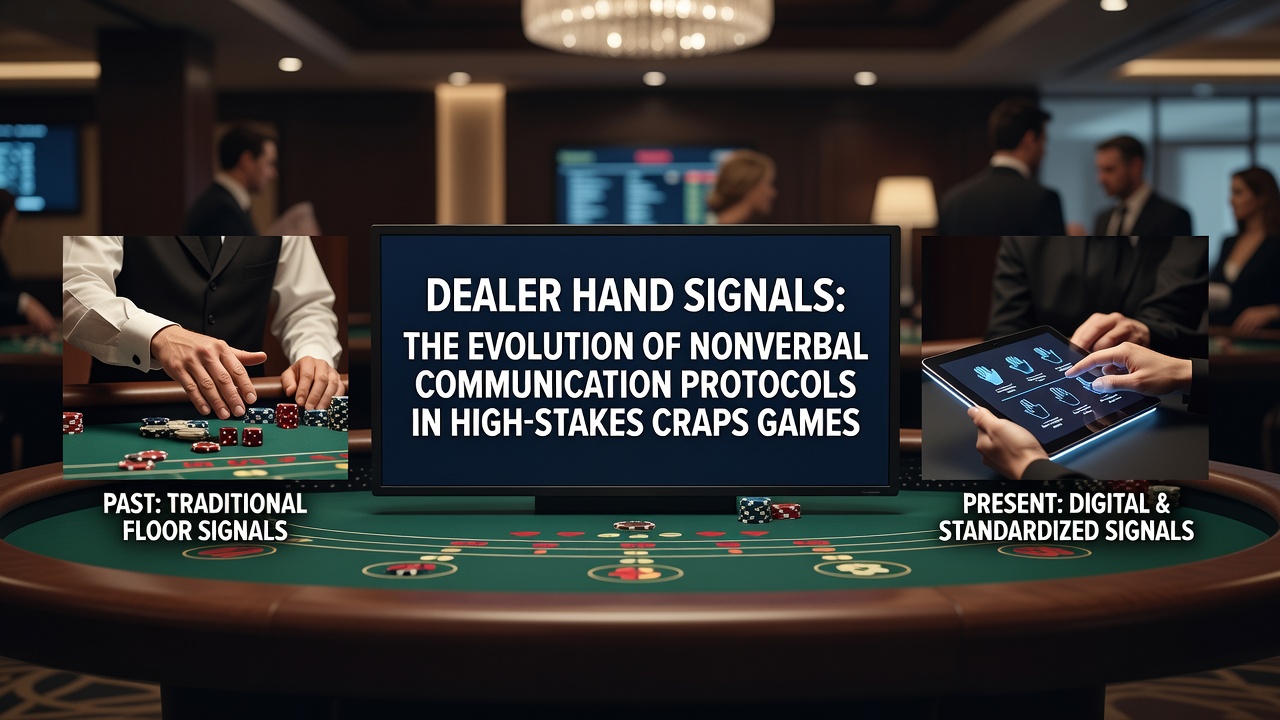
Dealer Hand Signals: The Evolution of Nonverbal Communication Protocols in High-Stakes Craps Games
High-stakes craps tables have long required precise nonverbal systems because ambient noise from crowds and dice rolls often drowns out spoken words, so dealers developed hand signals to confirm bets, payouts, and game states across the felt surface. These protocols emerged in the mid-20th century as casinos expanded in Nevada and Atlantic City, where floor supervisors needed reliable methods to verify transactions without disrupting play flow.
Origins in Early Casino Operations
Early signal systems drew from card game traditions yet adapted quickly to craps specifics such as point establishment, come bets, and odds wagers, and data from the Nevada Gaming Control Board shows that standardized gestures appeared in training manuals by the 1960s to reduce disputes at tables handling larger chip stacks. Observers note that initial codes relied on simple finger counts for numbers and open-palm movements for clearances, while more complex combinations evolved later to cover proposition bets and hard-way wagers that require exact verification before dice are thrown again.
Standardization Across Jurisdictions
Regulatory bodies in multiple regions pushed for uniform protocols during the 1980s and 1990s because rising table limits created opportunities for miscommunication that could affect both player funds and house accountability, and reports from the American Gaming Association detail how multi-property operators coordinated with state agencies to align signals so dealers transferring between venues maintained consistency. Those who've studied casino security records find that visual checks replaced verbal confirmations in high-limit pits where surveillance cameras captured every gesture for later review, and this shift coincided with the introduction of dedicated craps supervisors who monitored signal accuracy in real time.
Technological Integration and Protocol Refinements
Digital surveillance upgrades in the 2000s added overhead cameras that recorded hand movements frame by frame, which allowed training departments to analyze and refine gestures for clarity under varying lighting conditions common on casino floors. Research from the University of Nevada, Las Vegas documented how dealers incorporated wrist rotations and finger extensions to distinguish between pass line and don't pass line actions without ambiguity, and these adjustments proved especially useful when players placed multiple bets simultaneously across different sections of the layout. By September 2026 several major properties had incorporated augmented reality overlays for new dealer training that highlighted signal paths on simulated tables, though live games continued to rely on unaided visual exchange between staff and supervisors.
Signals in High-Stakes Environments
High-limit craps rooms maintain stricter signal sequences because single wagers can exceed standard table maximums and require dual verification from both the stickperson and boxperson before dice leave the shooter's hand. Experts have observed that a raised index finger paired with a circular motion indicates an odds bet behind the pass line, whereas a flat hand sweeping across the layout clears the previous round and resets all active wagers for the next come-out roll. Those monitoring regulatory filings note that casinos in Macau and Singapore adopted parallel systems during the same period to accommodate international players familiar with similar visual codes, creating cross-border consistency that reduced training time for traveling dealers.
Security Implications and Ongoing Adjustments
Security teams track signal deviations because intentional or accidental variations can signal collusion attempts or simple errors that affect payout accuracy, and industry reports indicate that annual audits now include random reviews of gesture compliance at tables with elevated betting limits. What's interesting is how environmental factors such as table height and dealer positioning influence signal visibility, prompting some properties to adjust stool heights and mirror placements so supervisors stationed behind the stickperson maintain clear sightlines. Data collected by Canadian provincial gaming authorities reveals that properties enforcing quarterly signal recertification for dealers experience fewer table discrepancies compared with venues using less frequent reviews, and these findings have influenced policy updates in additional North American markets.
Conclusion
Nonverbal communication protocols in high-stakes craps continue to evolve alongside surveillance technology and regulatory expectations, with current systems emphasizing clarity, consistency, and auditability across every gesture exchanged at the table. Properties that maintain rigorous training and periodic protocol reviews demonstrate measurable reductions in transaction errors, while cross-jurisdictional alignment supports dealer mobility without compromising game integrity. The combination of historical practices and modern oversight ensures that hand signals remain a reliable backbone for accurate play even as table limits and player volumes increase.