Forum Echoes: Community Theorycrafting That Drives Patch Responses in Competitive MOBA Scenes
Mara Berger · Sep 16, 2026
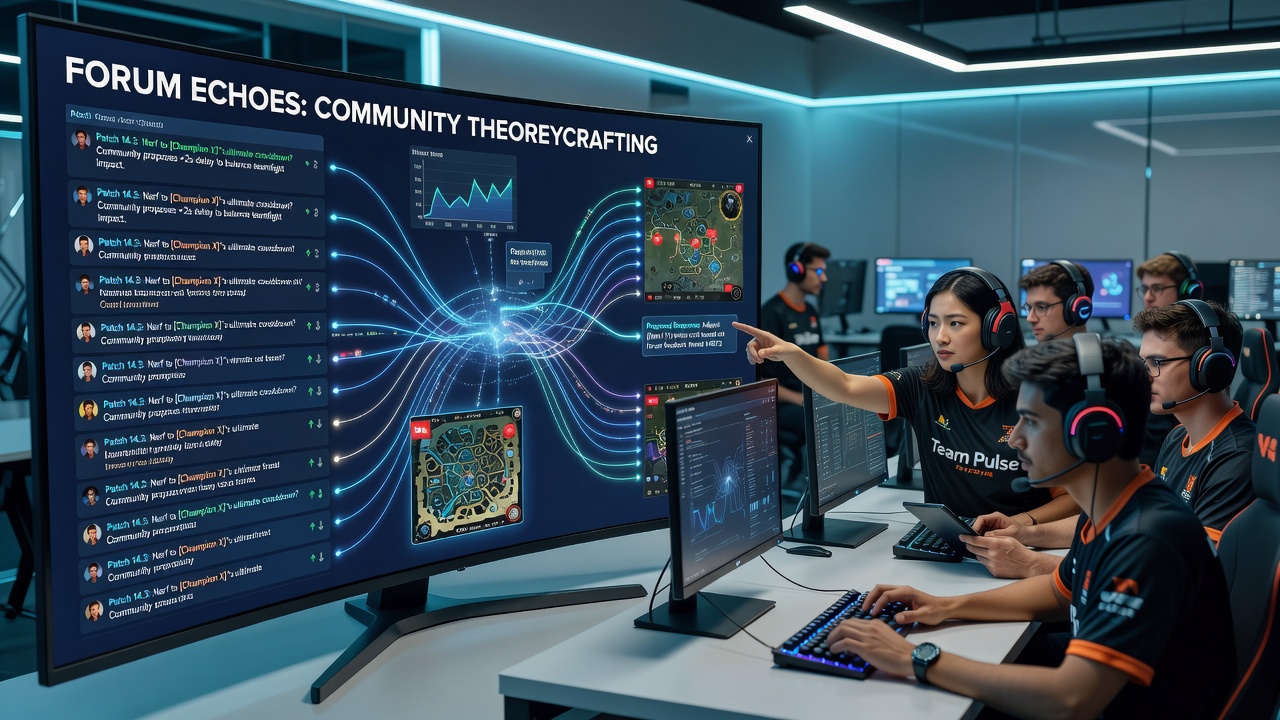
Forum Echoes: Community Theorycrafting That Drives Patch Responses in Competitive MOBA Scenes
Competitive MOBA scenes generate extensive player discussions across dedicated forums and subreddits where theorycrafting shapes developer responses through data aggregation and balance suggestions. These interactions create feedback loops that connect individual observations with aggregate statistics from ranked matches in titles such as League of Legends and Dota 2. Researchers have tracked how specific threads gain traction when they cite replay data, win rate differentials, and item efficiency metrics that align with internal studio analytics.
Mechanics Behind Community-Driven Theorycrafting
Players compile spreadsheets and simulation models that test champion interactions under various patch conditions, then post these findings for peer review in specialized sections of forums. The process involves breaking down ability ratios, cooldown interactions, and map control variables into quantifiable components that others can replicate or challenge with counter-examples from their own matches. Data shows that threads reaching several thousand upvotes often reference API endpoints or third-party tools that pull live match statistics, which gives the discussions empirical weight when forwarded to developer forums. Observers note that such posts frequently include time-stamped comparisons before and after minor updates, highlighting unintended synergies that only emerge at high levels of play.
Role of Aggregated Metrics in Patch Decisions
Studios monitor external sites where users upload parsed match logs because these datasets reveal patterns across thousands of games that internal testing might miss during limited beta phases. For instance, a spike in complaints about a particular support champion's zoning tools can coincide with uploaded data showing elevated kill participation rates in professional tournaments, prompting targeted adjustments. According to reports from the Entertainment Software Association, player-generated content contributes measurable input to live-service balancing cycles across multiple genres including MOBAs. This occurs because community models often isolate edge cases involving rare item combinations or specific team compositions that surface only after widespread adoption in solo queue environments.
Examples from Established MOBA Titles
In one documented sequence from early 2025, forum users identified an overperforming jungle pathing route in a popular MOBA by cross-referencing heatmaps from public match data with recorded professional scrims. The resulting thread accumulated detailed replies that modeled gold efficiency differences, leading developers to release a mid-season adjustment that altered terrain collision values. Another case involved Dota 2 community members who constructed decision trees around neutral item drops, demonstrating how certain hero pairings skewed win probabilities beyond expected ranges during the group stages of major events. These analyses reached the attention of the development team through official feedback channels and influenced subsequent changes to drop tables.
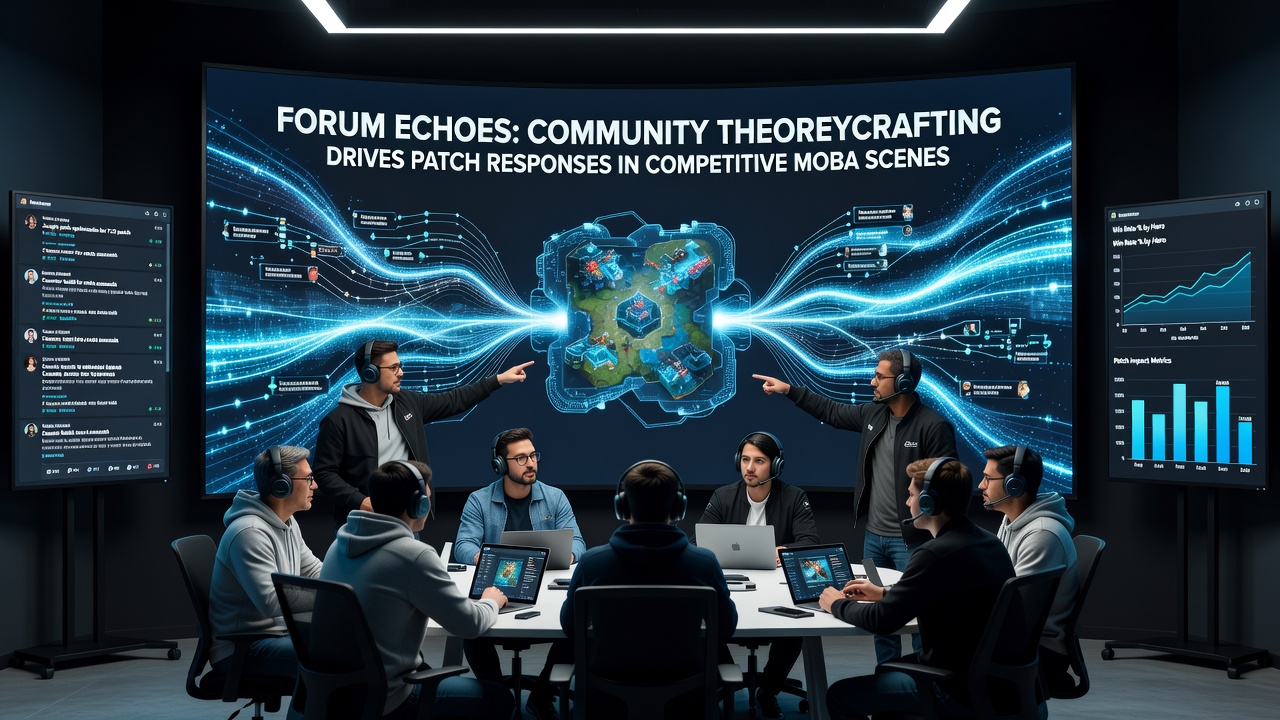
By September 2026, ongoing seasonal tournaments had already produced fresh datasets that forums processed into updated models for upcoming balance iterations. Participants often cross-reference tournament VODs with public leaderboards to isolate variables such as objective control percentages and damage distribution curves, which then feed into broader discussions about systemic health of the current meta.
Transmission Pathways from Forums to Studio Teams
Developers maintain dedicated community managers who surface recurring themes from high-engagement posts to internal balance meetings. These summaries frequently include linked spreadsheets or simulation outputs that quantify proposed changes, such as shifting base health values or modifying scaling coefficients on core abilities. Industry reports from the European Games Developer Federation indicate that such external contributions accelerate iteration cycles because they provide pre-validated hypotheses backed by player-collected evidence. The pathways also incorporate moderation systems that filter noise while preserving threads containing reproducible findings, allowing signals to propagate without overwhelming the volume of daily commentary.
Effects on Competitive Integrity and Meta Evolution
Competitive circuits experience direct downstream effects when patches address community-identified outliers because pro teams adjust draft priorities and practice regimens accordingly. Figures from major esports tracking platforms reveal that metas stabilize more rapidly after adjustments informed by aggregated forum input compared to purely internal testing periods. Those who study these dynamics point to reduced variance in pick rates across regions once community consensus highlights problematic outliers, although regional server differences can still produce divergent theorycraft outcomes that require separate monitoring.
Conclusion
Forum echoes in competitive MOBA scenes function as distributed research networks that translate raw match data into actionable balance recommendations through structured discussion and peer validation. The mechanisms rely on transparent metrics, shared modeling tools, and responsive studio processes that integrate external findings with proprietary telemetry. As seasonal cycles continue into late 2026 and beyond, these interactions sustain an evolving ecosystem where player-driven insights contribute to the maintenance of competitive fairness across global player bases.