Synchronizing Dealer Rotations with Table Occupancy Surges in Multi-Pit Poker Environments
Mara Berger · Oct 14, 2026
Synchronizing Dealer Rotations with Table Occupancy Surges in Multi-Pit Poker Environments
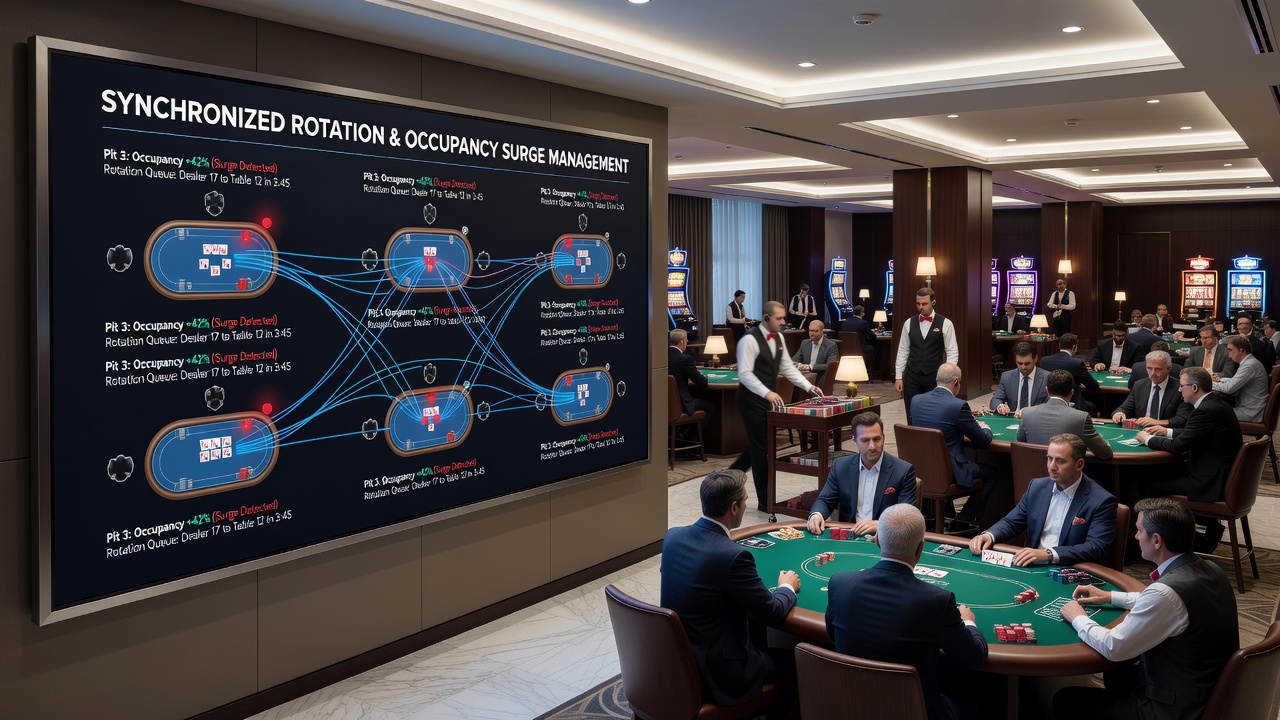
Casinos track table occupancy through integrated systems that record player counts and game starts in real time, and these metrics feed directly into dealer scheduling models that aim to match staff availability with demand spikes across multiple pits. Multi-pit poker environments span several hundred tables in large resorts, which means occupancy surges from tournaments, promotional events, or weekend rushes require precise adjustments to avoid delays in game starts while preventing overstaffing during lulls.
Occupancy Monitoring and Data Patterns
Operators collect data on table fills every fifteen minutes through electronic tracking software, and patterns emerge that show consistent surges between 6 p.m. and midnight on Fridays and Saturdays, while midweek afternoons often run at thirty to forty percent capacity. Research from the American Gaming Association indicates that accurate forecasting reduces labor costs by aligning rotations with these cycles rather than relying on fixed shifts. In October 2026 several properties in Las Vegas reported occupancy jumps of twenty-five percent during World Series of Poker satellites, which prompted temporary additions of relief dealers every ninety minutes instead of the standard two-hour rotation.
Rotation Protocols Across Pits
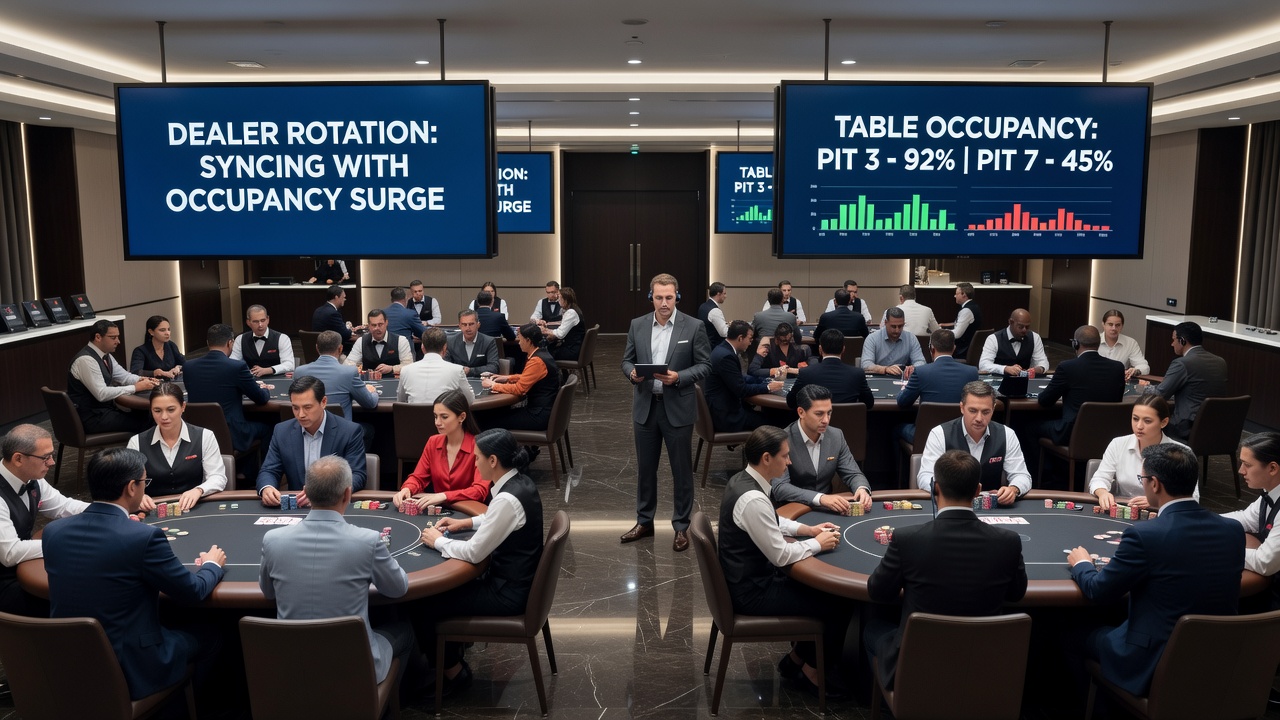
Supervisors assign dealers to specific pits based on game type and speed requirements, yet they maintain flexibility to move staff when occupancy crosses predefined thresholds such as eighty percent of tables in play. Standard practice calls for dealers to complete a down after two hours, at which point they receive a break or transfer to another pit, and this cycle repeats while managers monitor incoming player lists to anticipate when additional tables will open. Data from Nevada Gaming Control Board filings shows that properties maintaining under fifteen-minute table-open times during surges achieve higher player retention rates than those with longer waits.
Coordination between pit bosses and the dealer podium becomes critical when multiple tables fill simultaneously, and radio systems or tablet-based apps allow instant communication of staffing needs across floors. One documented approach involves pre-positioning a float pool of dealers near high-traffic pits during known peak windows, which cuts response time when occupancy climbs rapidly.
Technology Integration and Scheduling Tools
Modern poker rooms employ workforce management platforms that ingest live occupancy feeds and generate suggested rotation adjustments, and these systems factor in dealer certifications for specific games such as pot-limit Omaha or mixed variants. The platforms also account for union rules on break intervals and maximum consecutive hours, which prevents compliance issues while still addressing sudden demand. Observers note that properties using predictive analytics saw fewer dealer shortages during the October 2026 high season compared with manual scheduling methods.
Regulatory and Labor Factors
Gaming regulators require documented procedures for maintaining game integrity during staffing changes, and these rules influence how quickly dealers can be reassigned without interrupting ongoing hands. The Nevada Gaming Control Board outlines standards for dealer accountability and table supervision that extend to rotation timing, while the Australian Gambling Commission publishes comparable guidelines for large-scale poker operations in that region. Labor agreements further shape rotation windows, often mandating minimum rest periods that must fit around occupancy-driven demands.
Practical Adjustments in Live Settings
When a tournament concludes and players migrate to cash games, occupancy can rise across multiple pits within minutes, and managers respond by accelerating the next dealer rotation or calling in on-call staff. Properties track these transitions through historical data sets that correlate event end times with subsequent table demand, which allows preemptive staffing rather than reactive measures. Staff training emphasizes rapid hand counts and chip handling so that new dealers maintain game pace immediately upon seating.
Conclusion
Effective synchronization of dealer rotations with table occupancy surges relies on continuous data collection, flexible assignment protocols, and integrated technology that respects both regulatory requirements and labor constraints. Properties that refine these processes through ongoing analysis maintain consistent game availability across multi-pit layouts while controlling operational costs.